
Helix piercings have made a massive comeback over the past decade after first being popularized in the 1990s. Any piercing made to the upper cartilage of the ear is considered a helix piercing, and it's now …
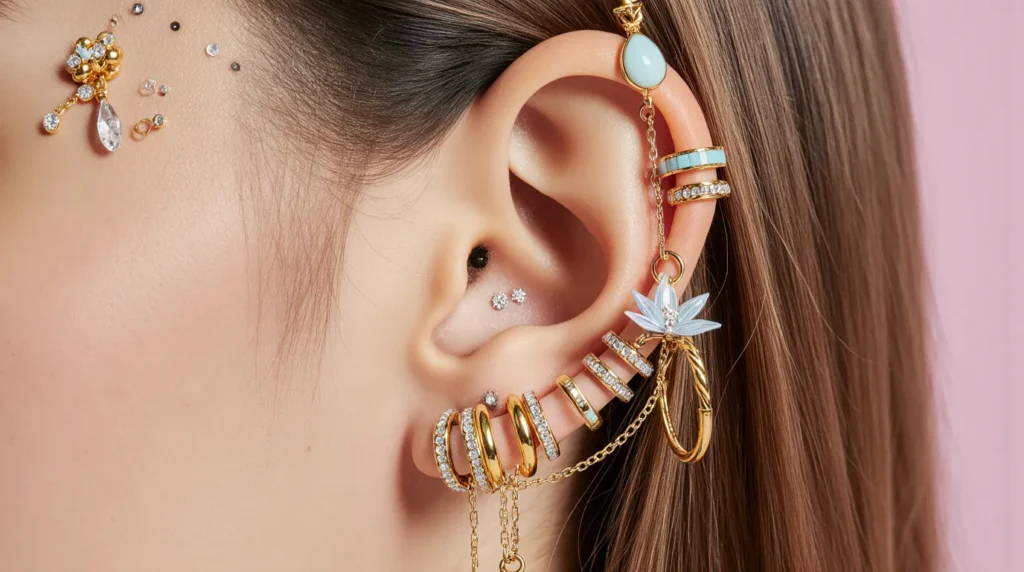

Helix piercings have made a massive comeback over the past decade after first being popularized in the 1990s. Any piercing made to the upper cartilage of the ear is considered a helix piercing, and it’s now the second most popular ear piercing after standard lobe piercings.
While you might recover from a lobe piercing in around a month, helix piercing healing time can take anywhere between three to six months, with some sources suggesting up to 12 months for full healing. This longer recovery period hasn’t deterred enthusiasts, however, as these piercings are increasingly more socially acceptable than they were just a few years ago. In fact, we’re seeing forward helix piercings particularly grow in popularity recently.
If you already have one or more lobe piercings but are interested in expanding your ear jewelry collection, helix piercings are a great next step. Throughout this guide, we’ll explore different types of helix piercings, smart aftercare practices, trendy helix piercing jewelry options for 2025, and everything you need to know before taking the plunge. Additionally, we’ll discuss pain levels (which typically rank around 7 out of 10) and provide practical tips to ensure your piercing experience is as smooth as possible.
Table of Contents
What is a helix piercing and why it’s trending in 2025
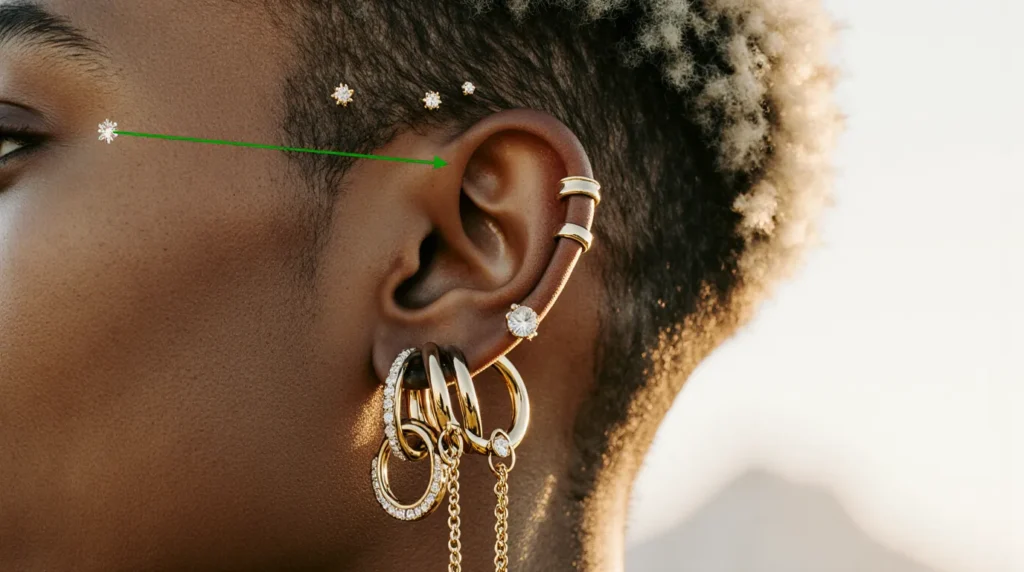
“A helix piercing is any piercing made to the upper cartilage of the ear.” — Cosmopolitan Editors, Beauty and style editors
The outer ear consists of cartilage and skin, creating a unique structure that helps define our individual appearance. When people talk about getting a “cartilage piercing,” they’re often referring to a helix piercing, yet there’s much more to understand about this increasingly popular form of body modification.
Understanding the helix area of the ear
The helix is specifically the prominent curved outer rim of the ear that extends from where your ear connects to your head (the root) all the way down to where it terminates at the earlobe. Anatomically speaking, the helix can be divided into three distinct parts: the ascending helix (extending vertically from the root), the superior helix (curving horizontally and posteriorly), and the descending helix (extending to the earlobe’s superior border).
What makes the helix such an appealing area for piercing is its visibility and versatility. This thin ridge of cartilage forms a natural frame around the ear, creating an ideal canvas for various jewelry styles. When you touch this area, you can feel the firm yet flexible cartilage beneath the skin.
Why helix piercings are more popular than ever
The year 2025 has seen helix piercings reach new heights of popularity, especially with innovative variations emerging. According to Robbie Milian, a piercer at Refinery7 in New York City, unique helix piercings—particularly the hidden helix—have become especially trendy.
This discreet placement tucks beneath the ear’s inner fold, creating a subtle yet stylish look that’s best adorned with flatback studs. Rebecca Kuhne from Studs notes that jewelry brands are now designing pieces specifically for this placement, featuring studs with tiny drop elements.
Furthermore, the auricle (or low helix) piercing has gained traction as an excellent introduction to cartilage piercings for newcomers. For those seeking more dramatic effects, double and triple helix piercings continue their reign as statement-making options, where multiple piercings are stacked in a row along the helix curve.
Essentially, helix piercings have evolved beyond mere fashion statements to become forms of personal expression, allowing for countless customization possibilities through placement and jewelry selection.
Helix vs other cartilage piercings
A common source of confusion is the relationship between helix and cartilage piercings. To clarify: all helix piercings are cartilage piercings, yet not all cartilage piercings are helix piercings. The term “cartilage piercing” refers to any piercing through the firm, flexible tissue found throughout various parts of the ear.
The ear contains several distinct cartilage areas suitable for piercing besides the helix, including:
- Tragus: The small projection in front of the ear canal
- Rook: The fold of cartilage above the ear canal
- Conch: The center part of the ear
- Daith: The innermost fold of cartilage
What distinguishes helix piercings from these other cartilage piercings is their specific placement along the outer ridge or rim of the ear. Moreover, each type of cartilage piercing has different healing characteristics, jewelry options, and visual impact.
Throughout 2025, we’ve witnessed growing interest in various helix placements because they strike an ideal balance—they’re noticeable enough to make a statement yet understated enough for professional environments, marking them as both trendy and timeless simultaneously.
Types of helix piercings to consider
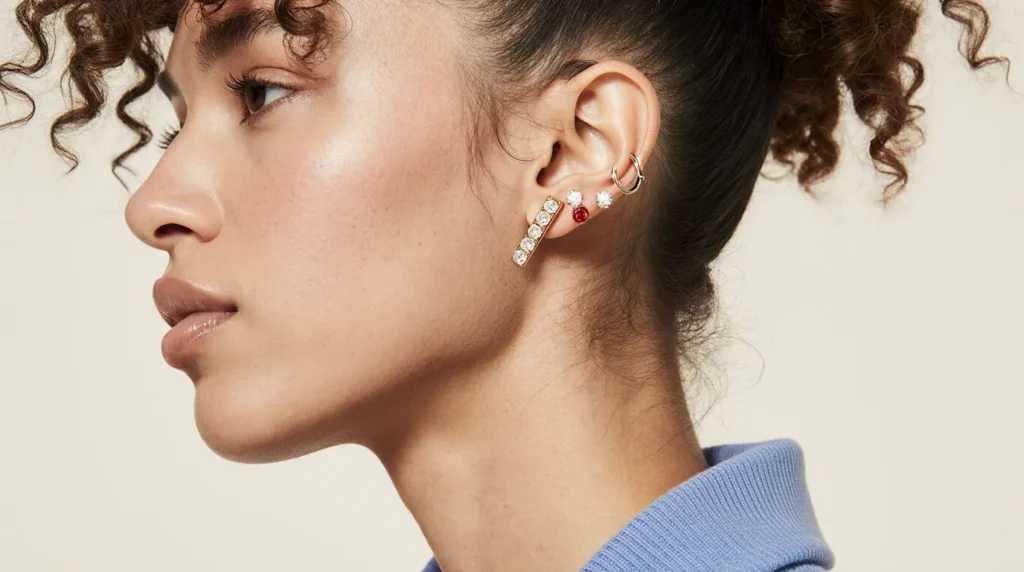
One of the most exciting aspects of getting a helix piercing is the variety of placement options available. Depending on your ear anatomy and personal style preferences, you can choose from several distinct types, each offering unique esthetic possibilities.
Single helix
The standard single helix is the most popular cartilage piercing and typically serves as an introduction to the world of cartilage modifications. Located on the upper outer cartilage of the ear along its rim, this classic piercing offers versatility in jewelry choices. Despite being an entry-level cartilage piercing, the single helix ranks slightly higher on the pain scale than earlobe piercings, yet remains more comfortable than other helix variations.
For those with thinner cartilage, a single helix provides an excellent foundation for future piercings. Once healed, you can adorn it with various styles, from simple studs to small hoops that follow the natural curve of your ear.
Double and triple helix
When one piercing isn’t enough, double and triple helix options offer more dramatic visual impact. A double helix features two piercings stacked vertically on the upper outer cartilage. These piercings are typically aligned with minimal space between them, creating a balanced, symmetrical look.
Triple helix piercings consist of three vertically aligned holes following the natural curve at the top of your earlobe. This arrangement creates a stunning silhouette and offers numerous styling possibilities. Many piercing enthusiasts choose matching jewelry to create a cohesive look, though mixing styles can produce equally striking results.
Forward helix
The forward helix, sometimes called the “anti-helix,” is positioned on the upper outer cartilage above the tragus, where the ear connects to the face. This placement has gained significant popularity recently as it allows piercing fans to maximize their jewelry options.
On the pain scale, forward helix piercings typically rank around 4 out of 10, though this varies by individual. The healing process takes considerably longer than standard helix piercings, generally requiring 4-12 months for complete healing. Due to the small surface area, tiny studs or clicker hoops work best for this placement. Some people opt for multiple forward helix piercings—double or triple—creating an elaborate arrangement that frames the face beautifully.
Mid and low helix
Mid helix piercings occupy the middle section of ear cartilage between the upper cartilage and upper lobe. This placement serves as an excellent connecting point if you already have both a helix and upper lobe piercing. The standard helix sits at the top of the ear, whereas the mid helix creates visual interest further down the ear’s rim.
The low helix (sometimes called an auricle) piercing sits just above where the earlobe begins. Its position makes it more visible from the front, creating a distinctive profile that works well with various jewelry styles.
Stacked helix combinations
For those seeking a truly customized look, combining different helix piercing types creates unlimited possibilities. Stacked combinations can include:
- Vertical stacks: Multiple piercings aligned vertically along the helix rim
- Constellation arrangements: Piercings placed to resemble star patterns
- Mixed placement combos: Combining forward helix with standard helix piercings
When planning stacked combinations, professional piercers recommend spacing new piercings approximately four months apart. This spacing allows proper healing time and ensures there’s adequate room between jewelry pieces for cleaning and changing. Your anatomy ultimately determines how many piercings your ear can support comfortably—some people can accommodate five or more, while others may be limited to fewer options.
Consequently, consulting with an experienced piercer before committing to multiple piercings ensures your ear has sufficient space for your desired arrangement.
Pain, process, and helix piercing healing time
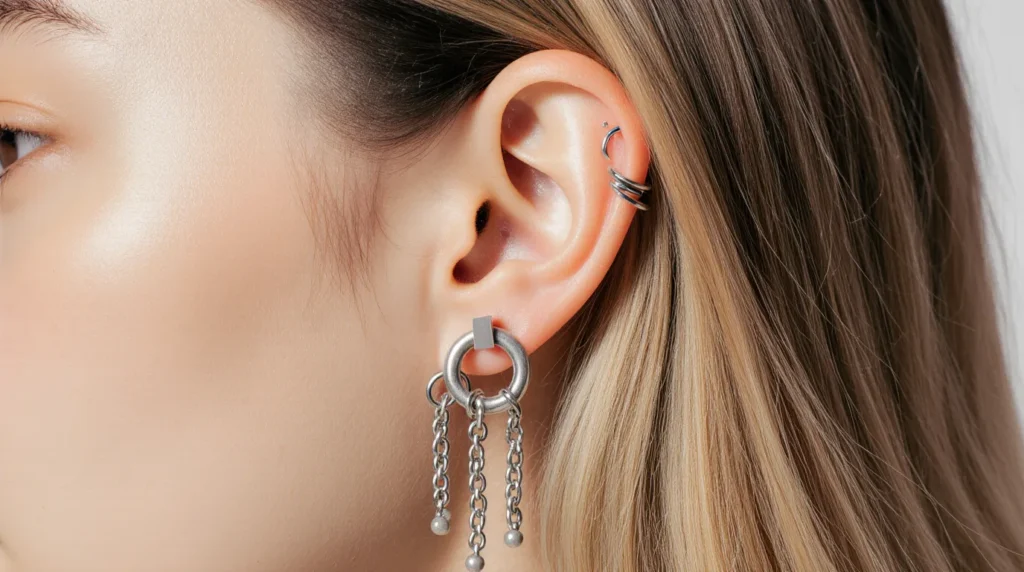
Getting a helix piercing involves more than just the momentary pinch. Let me walk you through what to expect from the piercing chair to fully healed ear.
What to expect during the piercing
The piercing process itself is quick—just a few minutes from start to finish. Professional piercers always use a needle rather than a gun for cartilage piercings. This is critical since piercing guns can actually shatter your cartilage, causing permanent damage. During the procedure, you’ll feel pressure as the needle passes through the skin, cartilage, and then skin again.
At reputable studios, piercers use brand new, fully sterilized needles for each client. They’ll also select initial jewelry that’s slightly longer than needed to accommodate swelling. After piercing, you’ll notice immediate redness and sensitivity—this is entirely normal.
Pain level compared to other piercings
On the pain scale, helix piercings typically rank around 5-6 out of 10. This places them in the moderate discomfort category—more painful than lobe piercings but less intense than other cartilage placements. As one piercer explains, “Pain tolerance varies, but generally your helix will hurt more than your lobes as it is less fleshy”.
The good news? Most people find helix piercings less painful than expected since the cartilage is relatively thin in this area. Nevertheless, pain experiences differ substantially based on individual tolerance and anatomy.
Typical healing timeline
Healing occurs in distinct phases. During the initial 2-4 weeks, you’ll likely experience swelling, redness, and tenderness. The early healing phase (2-6 weeks) brings decreased inflammation but occasional sensitivity.
Initial healing takes approximately 2-4 months, yet full healing requires 6-9 months for most people. Some sources suggest it could take up to a year for complete healing, particularly if you choose a hoop rather than a stud.
Throughout this time, the external skin heals first, while the cartilage inside continues healing invisibly. Once discharge, swelling, redness, and soreness have completely stopped, you’ll know your piercing has fully healed.
When to downsize your jewelry
Downsizing—replacing your initial longer post with a shorter one—is an often overlooked yet crucial step in the healing process. This typically occurs around 4-6 weeks after getting pierced, once initial swelling has subsided significantly.
The benefits of downsizing are substantial. Firstly, it prevents the jewelry from snagging on clothing or hair. Additionally, longer posts left in place too long can cause the piercing channel to shift angle permanently. As one expert notes, “When the initial piercing jewelry is left long, there is more room for that bar to torque at a more extreme angle”.
Your piercer will discuss the optimal timing for your specific situation, so always follow up as recommended.
Helix piercing aftercare: smart tips for a smooth recovery
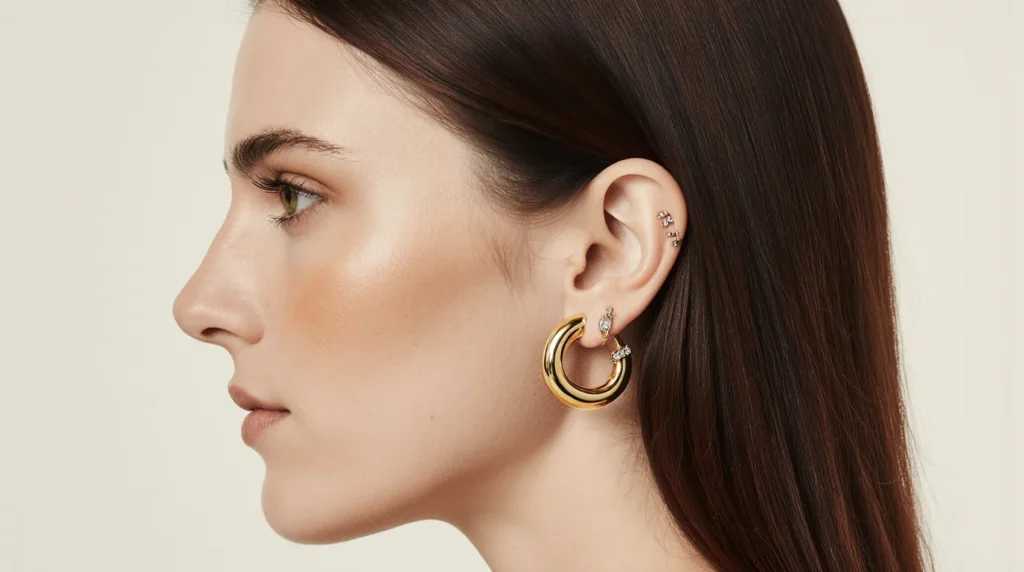
Proper aftercare is absolutely essential for a successful helix piercing experience. Once the needle has done its job, your commitment to careful maintenance begins.
Daily cleaning routine
To keep your piercing healthy, clean it twice daily with a sterile saline solution or sea salt soak (¼ teaspoon of sea salt in 8oz of warm water). Start by washing your hands thoroughly, subsequently apply the solution to your piercing using a cotton swab, and let it sit for a few minutes to soften any crusting. Avoid cotton wool balls as they can leave fibers behind—cotton pads or paper towels work better for drying. Notably, resist the urge to rotate your jewelry during cleaning as this can damage the healing tissue.
What to avoid during healing
Certain habits can sabotage your healing process. Straightaway stop using alcohol, hydrogen peroxide, or antibiotic ointments on your piercing as these actually slow healing by killing new healthy cells. Furthermore, avoid swimming pools, hot tubs, lakes, or beaches for at least 2-3 weeks. Keep hair products, makeup, and lotions away from the piercing area. Undoubtedly the most important rule: don’t fiddle with your jewelry—touching it unnecessarily introduces bacteria and causes irritation.
How to sleep without irritating your piercing
Sleeping on a fresh helix piercing puts 8-10 pounds of pressure on it all night long! One clever solution: use a travel pillow with your ear positioned in the center hole. Otherwise, train yourself to sleep on your back or the opposite side. For added protection, change your pillowcase every 1-2 days or cover your pillow with a clean t-shirt nightly.
Signs of infection or irritation
Normal healing includes minor swelling, redness, and occasional clear or light yellow discharge. In contrast, potential infection signs include:
- Intense pain, heat, or excessive swelling
- Green or dark yellow discharge
- Jewelry becoming embedded in the skin
- Fever or swollen lymph nodes
When to seek professional help
Altogether, most minor irritation resolves with proper care. Nevertheless, see a doctor immediately if the infection spreads beyond the piercing site, you develop a fever, or the infection doesn’t improve after 48 hours of home treatment. Remember that cartilage infections can become serious if left untreated.
Helix piercing jewelry: best styles for 2025
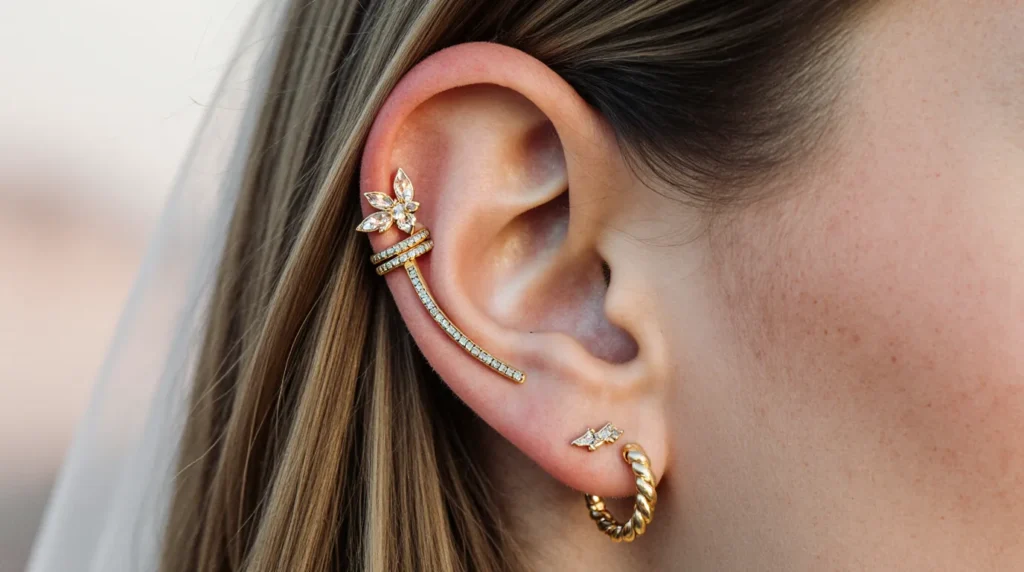
“Piercing jewelry is typically limited to gold, implant-grade steel, and titanium, all of which do not harbor bacteria.” — Isaac, Professional piercer, quoted as expert in Cosmopolitan
Choosing the right jewelry for your helix piercing plays a crucial role not only in its appearance but also in the healing process. Let’s explore the latest trends and smart choices for 2025.
Studs vs hoops: what to wear and when
Initially, studs are strongly recommended for new helix piercings. Primarily, this is because studs move less, reducing irritation during healing . In contrast, hoops rotate easily, potentially pulling crusties through the healing fistula and prolonging recovery . Once your piercing fully heals (typically 6-9 months), you can safely switch to hoops if desired . Many piercing experts note that studs provide more stability, facilitating a smoother and quicker healing process .
Flat backs, labrets, and clickers
Flat back studs feature a smooth, flush backing that sits comfortably against your ear—ideal for cartilage piercings since this area sits close to your head . Labret studs have longer posts with a flat end on one side rather than an earring back, giving adequate space for healing . Clickers, alternatively, are a popular choice for healed piercings, featuring a hinged segment that “clicks” into place, making them easier to insert than traditional hoops .
Materials to choose: titanium, gold, and more
For fresh piercings, material quality is non-negotiable. Implant-grade titanium is highly recommended as it’s biocompatible and contains minimal nickel . Solid 14K or 18K gold (not gold-plated) works well for initial piercings as these materials won’t degrade when exposed to moisture . Other suitable options include:
- Surgical stainless steel (though it contains trace amounts of nickel)
- Niobium (hypoallergenic and available in various colors)
- Platinum (extremely hypoallergenic but costly)
Trendy designs: minimalist, celestial, and chains
For 2025, minimalist designs continue to dominate helix jewelry trends. The hidden helix placement pairs beautifully with dainty studs featuring tiny drop elements . Chain designs connecting multiple piercings create a cascading effect that’s particularly trendy . Additionally, celestial themes (stars, moons) and pavé styles remain popular choices. For a curated look, mixing flat back studs with small hoops creates dimension without overwhelming your ear .
How to change your jewelry safely
Naturally, you’ll want to switch your jewelry eventually. Before touching your ear, sterilize your new piece with an earring disinfectant . Wash your hands thoroughly, subsequently remove your existing jewelry . Clean the piercing site with fragrance-free soap or saline solution before inserting the new piece . For flatback studs, simply twist or pull the top to remove the backing .
Conclusion
Helix piercings certainly offer a versatile and stylish way to express your personal esthetic. Though healing takes considerably longer than lobe piercings, the payoff makes the patience worthwhile. Most people find the pain manageable, ranking around 5-6 on the discomfort scale—certainly bearable for the stunning results you’ll achieve.
During your healing journey, remember that proper aftercare directly determines your piercing success. Saline solutions work best for daily cleaning, while avoiding harsh chemicals and unnecessary touching prevents complications. Additionally, smart sleeping habits using travel pillows can significantly reduce irritation during those crucial first months.
Your initial jewelry choice matters tremendously. Studs provide better stability for new piercings, specifically flat backs and labrets that minimize movement. After full healing, you can explore trendy options like dainty chains and celestial designs that dominate 2025 styles. Implant-grade titanium remains the gold standard for fresh piercings due to its biocompatibility.
The beauty of helix piercings lies in their customization potential. Whether you prefer a single subtle piercing or an elaborate constellation arrangement, your ear becomes a canvas for self-expression. The forward helix has particularly gained popularity for those seeking distinctive looks that frame the face beautifully.
Before taking the plunge, consult with experienced piercers who understand your anatomy and can recommend optimal placements. This partnership ensures you’ll achieve your desired esthetic while respecting your body’s unique structure. Ultimately, with patience and proper care, your helix piercing will become a stunning, long-lasting addition to your personal style for years beyond 2025 trends.
FAQs
Q1. What are the latest helix piercing trends for 2025? Some of the trendiest helix piercing styles for 2025 include hidden helix piercings, forward helix piercings, and stacked combinations. Minimalist jewelry designs, celestial-themed pieces, and chain connectors between multiple piercings are particularly popular this year.
Q2. How long does it take for a helix piercing to heal? The initial healing phase for a helix piercing typically takes 2-4 months. However, full healing can take anywhere from 6-12 months, depending on individual factors and aftercare practices.
Q3. Are helix piercings considered professional in workplace settings? Generally, helix piercings are widely accepted in most professional environments. They are often viewed similarly to standard lobe piercings and are rarely an issue in the workplace, especially when adorned with subtle, appropriate jewelry.
Q4. What type of jewelry is best for a new helix piercing? For new helix piercings, flat-back studs made of implant-grade titanium or solid 14K-18K gold are highly recommended. These materials are biocompatible and less likely to cause irritation during the healing process.
Q5. How painful is a helix piercing compared to other ear piercings? Helix piercings typically rank around 5-6 out of 10 on the pain scale, making them moderately uncomfortable. They are generally more painful than lobe piercings but less intense than some other cartilage piercings. Pain tolerance varies among individuals.