Learning how to meditate properly doesn't have to be complicated or time-consuming. Recent research from neuroscientist Amishi Jha discovered that just 12 minutes of meditation, 5 days a week can protect and strengthen your ability to …
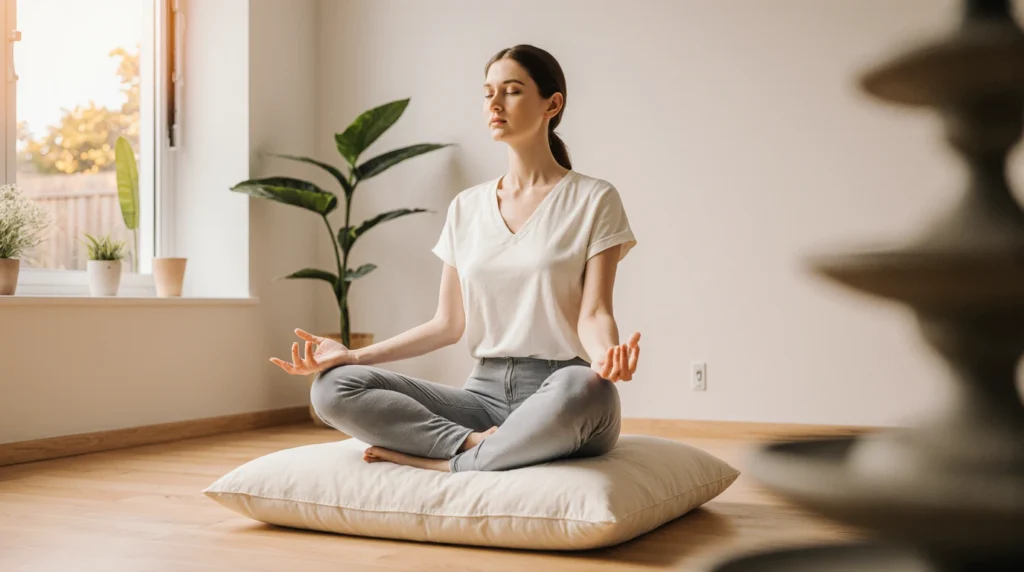

Learning how to meditate properly doesn’t have to be complicated or time-consuming. Recent research from neuroscientist Amishi Jha discovered that just 12 minutes of meditation, 5 days a week can protect and strengthen your ability to pay attention. Even more surprisingly, there are currently more than 1,500 research studies discussing the benefits of meditation.
Many people wonder how to meditate correctly, especially when first starting out. The truth is, learning how to meditate for beginners doesn’t require special equipment or hours of your day. In fact, even just a few minutes daily can make a significant difference. When we practice meditation properly at home, we can experience reduced stress levels, improved mood, and a more balanced mindset.
Throughout this guide, we’ll explore the fundamentals of meditation, debunk common myths, and provide a straightforward approach that actually works. By the end, you’ll have all the tools you need to establish a meditation practice that fits seamlessly into your daily routine. After all, setting aside a little time each day to get to know your mind is a great step toward an altogether healthier and happier life.
Table of Contents
What is meditation and why it matters
“Meditation brings wisdom; lack of meditation leaves ignorance. Know well what leads you forward and what holds you back, and choose the path that leads to wisdom.” — Buddha, Founder of Buddhism, historical spiritual leader
Meditation is an ancient practice dating back thousands of years that involves focusing or clearing your mind using a combination of mental and physical techniques. Despite its age, this practice remains popular worldwide because of its significant benefits for brain health and overall well-being.
Understanding the purpose of meditation
The core purpose of meditation extends beyond simple relaxation. Traditionally, meditation aimed to explore meaning and purpose in life while connecting with deeper existential awareness. Furthermore, modern science shows that meditation positively affects your brain and mental health through various mechanisms.
People who meditate regularly experience decreased symptoms of anxiety and depression, improved ability to think and concentrate, and better emotional adaptation. Additionally, according to the National Health Interview Survey, the percentage of U.S. adults who practiced meditation more than doubled between 2002 and 2022, from 7.5% to 17.3%.
Learning how do you meditate correctly involves understanding that it’s essentially about training your attention and awareness to achieve mental clarity and emotional stability. The practice helps you develop non-reactivity—being able to notice thoughts and pause rather than immediately react to them.
Common myths and misconceptions
Despite its growing popularity, several myths about how to meditate properly persist:
- You must clear your mind completely: Meditation isn’t about forcing your mind to go blank. Instead, it’s about observing thoughts without judgment and developing focused awareness.
- You need hours to meditate: Even five-minute sessions can provide benefits. For beginners learning how to meditate properly at home, starting small is perfectly acceptable.
- Meditation is only for religious or spiritual people: While meditation has foundations in various religions, you don’t need to be religious to practice it. Modern meditation is often secular and evidence-based.
- You must sit cross-legged: There are numerous meditation postures and styles. Some forms like Qi Gong and Tai Chi involve movement rather than sitting still.
How meditation differs from mindfulness
Although closely related, meditation and mindfulness are distinct concepts. Meditation is a structured practice where you set aside specific time to focus your mind, whereas mindfulness describes a quality of being present and fully engaged in the moment.
Meditation typically requires setting aside dedicated time and space, while mindfulness can be integrated into daily activities like eating or walking. Consequently, meditation is a tool or method used to cultivate mindfulness, but not all meditation practices focus solely on mindfulness.
In essence, if you’re wondering how to meditate for beginners, remember that meditation is the formal practice, while mindfulness is the quality you’re developing through that practice—the ability to be fully present without judgment.
How to meditate properly: a step-by-step guide
Now let’s explore the actual practice of meditation with clear steps you can follow immediately. Developing a meditation routine becomes much simpler once you understand the fundamentals.
1. Find a quiet and comfortable space
Creating a dedicated meditation space signals to your mind it’s time to focus inward. Look for a quiet corner in your home where you won’t be disturbed. This doesn’t require an entire room—even a small area with minimal distractions works perfectly. Consider adding elements that promote calmness such as plants, soft lighting, or a comfortable cushion.
2. Choose a posture that works for you
Contrary to popular images, you don’t need to twist into a pretzel position to meditate properly. The key is finding a stable, comfortable position that allows you to stay alert yet relaxed. Sitting in a chair with feet flat on the floor works well for beginners. If you prefer the floor, use a cushion to elevate your hips above your knees. Most importantly, keep your spine straight but not rigid—this allows for proper breathing and energy flow.
3. Focus on your breath or a single point
Once settled, direct your attention to a focal point. For beginners, your breath provides the most accessible anchor. Simply notice the natural rhythm of your breathing—the sensation of air entering and leaving your nostrils, or your chest rising and falling. Don’t try to control your breath; just observe it.
4. Notice distractions and gently return
Your mind will inevitably wander—this is normal, not failure. Each time you notice your thoughts drifting, gently acknowledge it without judgment. Mental labels like “thinking” can help. Then, kindly redirect your attention back to your breath or chosen focal point. This process of noticing and returning is the actual practice of meditation.
5. End with a moment of reflection
Conclude your session mindfully rather than abruptly. Take several deep breaths and gradually widen your awareness to include your body and surroundings. Notice how you feel compared to when you started. Some practitioners find it helpful to express gratitude or set an intention for carrying this calm awareness into daily activities.
Exploring different types of meditation
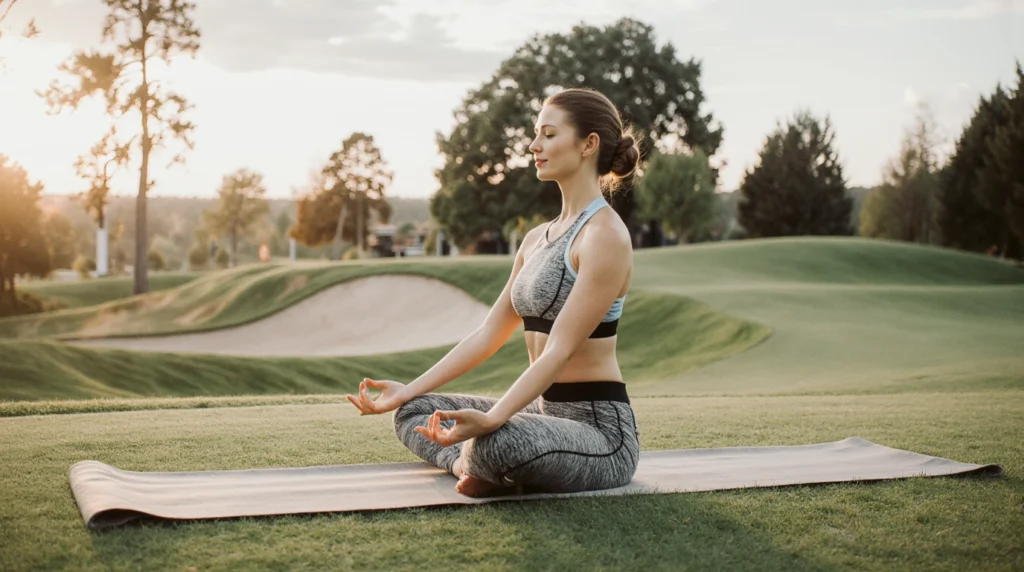
Different meditation techniques offer unique pathways to mindfulness, each with distinct benefits and approaches. Let’s explore five popular methods to help you discover how to meditate properly based on your personal preferences.
Breath-focused meditation
One of the most accessible ways to meditate correctly involves focusing on your natural breathing pattern. Simply direct your attention to the sensation of air entering and leaving your nostrils, or your chest rising and falling. When your mind wanders, gently return your focus to your breath. This foundational practice helps calm your nervous system and sharpen concentration.
Body scan meditation
This technique involves mentally scanning through your body from head to toe, noticing sensations without judgment. During a body scan, you bring awareness to each body part, observing any tension, comfort, or discomfort. This meditation promotes deeper body awareness, reduces stress, and can improve your mind-body connection.
Walking meditation
For those who find sitting still challenging, walking meditation offers an alternative approach to practicing mindfulness. Focus on the sensations in your feet as they contact the ground, coordinating your breath with your steps. This practice transforms an everyday activity into a mindful experience while simultaneously grounding you in the present moment.
Loving-kindness meditation
This practice cultivates compassion toward yourself and others through directed positive thoughts. Begin by focusing on feelings of warmth and kindness toward yourself, repeating phrases like “May I be happy, may I be healthy.” Subsequently, extend these wishes to loved ones, neutral people, and eventually to all beings.
Guided imagery meditation
Guided imagery uses visualization to create calming mental scenes. This method engages all five senses, imagining peaceful environments in vivid detail. Research suggests nature-based guided imagery specifically can reduce anxiety symptoms. This approach works well for beginners learning how to meditate properly at home.
Making meditation a daily habit
“Meditation is a lifelong process. Give it a try. As you get deeper and more disciplined into the process, you’ll get deeper and more disciplined in your mind and life.” — Brendon Burchard, High performance coach and author
Creating a daily meditation habit is where the true power of the practice really shines. Let’s look at simple ways to make meditation part of your everyday life.
Start small and stay consistent
Consistency matters more than session length when learning how to meditate properly. Begin with just 2-5 minutes of meditation and gradually increase as you become comfortable. Some research suggests morning meditation may lead to higher consistency rates. Most importantly, don’t pressure yourself to meditate for long periods right away. Even practicing three times weekly for five minutes is a perfect starting point for beginners.
Use reminders and cues
Link meditation to activities you already do daily – what experts call “habit stacking”. Perhaps meditate after your morning coffee or before bedtime. Visual cues like a meditation cushion placed prominently can serve as powerful reminders. Likewise, phone alerts at strategic times can prompt you to pause for mindfulness throughout your day.
Track your progress and reflect
Recording your meditation practice provides visual evidence of your commitment. Consider using a journal to note duration, technique, and insights from each session. Many meditation apps also offer streak tracking features that build motivation. Whenever you notice improvements in your focus or mood, celebrate these small victories.
Overcoming common challenges
Mind wandering is normal – simply notice it without judgment and gently return your attention. On difficult days, try counting your breaths to strengthen focus. Physical exercise prior to meditation often helps relax the body. Remember that meditation is called a “practice” for good reason – it requires patience without expecting perfection.
Conclusion
Learning how to meditate properly remains one of the most accessible ways to improve your mental wellbeing. Throughout this guide, we’ve explored meditation fundamentals, debunked common misconceptions, and provided practical steps for establishing a sustainable practice. Remember that meditation doesn’t require completely clearing your mind or sitting for hours in perfect lotus position. Instead, it focuses on developing awareness and attention.
The journey begins with just a few minutes daily. Perhaps most importantly, consistency matters more than duration when first establishing your practice. You might find certain meditation styles resonate more with your personality—whether that’s breath-focused techniques, body scans, walking meditation, loving-kindness practice, or guided imagery.
Meditation offers scientifically-proven benefits for your brain health, emotional regulation, and overall wellbeing. Research clearly demonstrates that even brief, regular sessions can strengthen your attention and reduce stress. Many practitioners report improved mood and greater mental clarity after establishing a consistent routine.
Starting small works best for long-term success. Five minutes of daily practice can yield more benefits than an occasional hour-long session. Additionally, linking meditation to existing habits helps cement it into your daily routine. Morning coffee followed by brief meditation creates a natural pairing that supports consistency.
Challenges will arise during your meditation journey—restless thoughts, impatience, or difficulty finding time. These obstacles actually represent opportunities to deepen your practice rather than signs of failure. Each time you notice your mind wandering and gently bring it back, you strengthen your mental muscles.
The path to meditation mastery unfolds gradually. Rather than seeking perfection, approach each session with curiosity and self-compassion. Your meditation practice remains uniquely yours—a personal journey toward greater awareness and presence in your daily life. Thus, the most important step happens now: beginning your practice today, one mindful breath at a time.
Key Takeaways
Meditation doesn’t require perfection or hours of practice—just 12 minutes, 5 days a week can strengthen your attention and reduce stress according to neuroscience research.
• Start with 2-5 minutes daily and focus on consistency over duration for lasting habit formation • You don’t need to clear your mind completely—simply notice wandering thoughts and gently return focus to your breath • Choose any comfortable posture that keeps your spine straight; cross-legged sitting isn’t mandatory for effective practice • Link meditation to existing daily habits like morning coffee to create natural reminders and boost consistency • Explore different techniques (breath-focused, body scan, walking meditation) to find what resonates with your lifestyle
The key to successful meditation lies in approaching it as a practice, not a performance. Each time your mind wanders and you bring it back, you’re actually strengthening your mental awareness—this is the real work of meditation, not achieving a perfectly quiet mind.
FAQs
Q1. How long should I meditate each day as a beginner? Start with just 2-5 minutes daily and gradually increase as you become comfortable. Consistency is more important than duration when first establishing your practice. Even meditating for 5 minutes, three times a week, is a great starting point for beginners.
Q2. Do I need to sit cross-legged to meditate properly? No, you don’t need to sit cross-legged. The key is finding a stable, comfortable position that allows you to stay alert yet relaxed. Sitting in a chair with feet flat on the floor works well for beginners. The most important thing is to keep your spine straight but not rigid to allow for proper breathing.
Q3. What should I do when my mind wanders during meditation? Mind wandering is normal and not a sign of failure. When you notice your thoughts drifting, gently acknowledge it without judgment. You can use mental labels like “thinking” to help. Then, kindly redirect your attention back to your breath or chosen focal point. This process of noticing and returning is the actual practice of meditation.
Q4. Are there different types of meditation I can try? Yes, there are various meditation techniques you can explore. Some popular types include breath-focused meditation, body scan meditation, walking meditation, loving-kindness meditation, and guided imagery meditation. Each offers unique benefits and approaches, so you can find one that resonates with your personal preferences.
Q5. How can I make meditation a daily habit? To make meditation a daily habit, start small and stay consistent. Use reminders and cues, such as linking meditation to activities you already do daily. Consider tracking your progress in a journal or using meditation apps with streak tracking features. Remember, it’s a practice that requires patience, so don’t expect perfection and celebrate small victories along the way.